Carga
Manténgase energizado para su conducción.
Usted tiene preguntas sobre la carga. Nosotros tenemos respuestas
Con los vehículos electrificados, ya no tiene que depender de la gasolina como la única fuente de energía. De hecho, los modelos eléctricos y de celda de combustible no utilizan combustible fósil en absoluto. Es por eso que dos de las preguntas más importantes que muchos compradores hacen son: "¿Cómo mantengo cargado mi vehículo electrificado?" y "¿Cómo se adapta a mi vida?" Estamos aquí para responder estas preguntas y más.
Qué afecta la autonomía

Temperatura exterior
Al igual que con los vehículos de gasolina, los vehículos eléctricos también se ven afectados por temperaturas extremas. Tanto el clima frío como el muy caluroso afectan el rendimiento de la batería, reduciendo la autonomía. Las bajas temperaturas también causan que la presión de los neumáticos disminuya, lo que significa más resistencia a la rodadura.

Control de clima
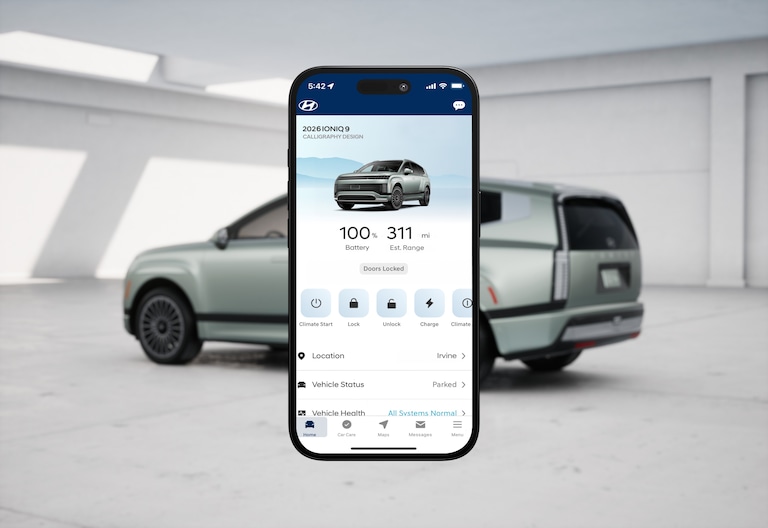
Usar el A/C, la calefacción o los asientos calefaccionados puede agotar la batería. Para conservar energía, precaliente o pre-enfríe su vehículo eléctrico mientras está enchufado, lo cual se puede hacer de forma remota con la aplicación Hyundai Bluelink.

Estilo de conducción
La conducción agresiva, como aceleraciones rápidas y frenadas bruscas, consume más energía de la batería. Para maximizar su autonomía, intente aumentar la velocidad gradualmente y anticipe las paradas para reducir la velocidad suavemente.

Velocidad
Si desea maximizar la autonomía, las velocidades moderadas son clave. Las velocidades más altas significan más resistencia al viento, lo que requiere más potencia para compensar. Esto hace que el o los motores se calienten y se vuelvan menos eficientes. Además, la batería no recibe tanta carga del frenado regenerativo.

Terreno
Si su ruta atraviesa un área montañosa o montañosa, su autonomía actual disminuirá más rápido de lo normal, ya que conducir cuesta arriba consume más energía que viajar en terreno nivelado.

Otros factores
La autonomía de conducción de un vehículo eléctrico también se ve afectada por otras muchas formas, incluyendo el peso que transporta, la presión de los neumáticos y el estado de la batería.

Frenado regenerativo

Alto
Configurado en niveles más altos de frenado regenerativo, se obtiene una mayor captura de energía al desacelerar. En IONIQ 5, IONIQ 6 y KONA Electric, puede usar la función i-Pedal que activa los frenos cuando levanta el pie del acelerador, reduciendo la velocidad hasta detenerse por completo.

Bajo
Cuando se configura en los niveles más bajos de frenado regenerativo, se captura menos energía, pero se obtiene un avance por inercia más largo y suave cuando se levanta el pie del pedal del acelerador.

Inteligente
Active el Sistema de Regeneración Inteligente, y ajustará automáticamente el nivel de frenado regenerativo según la velocidad y la distancia del vehículo que tiene delante.
MPGe
¿Qué es exactamente MPGe?
Hacer el cambio de un vehículo de gasolina a uno electrificado es una decisión importante. Una gran razón para optar por lo eléctrico son los menores costos generales de energía. Para facilitar la comparación entre los modelos eléctricos y de gasolina, la EPA creó el MPGe, que significa "millas por galón de equivalente de gasolina".
En pocas palabras, MPGe es la distancia que un vehículo eléctrico puede recorrer con 33.7 kWh de electricidad, que es el equivalente energético de un galón de gasolina.
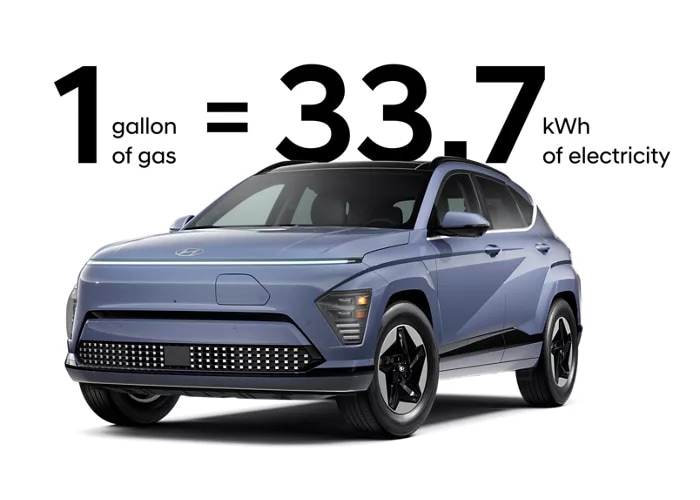
Como ejemplo, aquí hay una comparación entre la KONA Electric 2025 y nuestra KONA de gasolina:
Autonomía
KONA Electric SE 2025: 118 MPGe (estimado EPA)
KONA SE 2025 (gasolina): Hasta 31 MPG (combinado)
Costo para viajar 100 millas:
KONA Electric SE 2025: $4.00 (a $0.14 por kWh)
KONA SE 2025 (gasolina): $10.01 (a $3.10 por galón)
Cargando su Hyundai
Tipos de cargadores En casa o sobre la marcha.
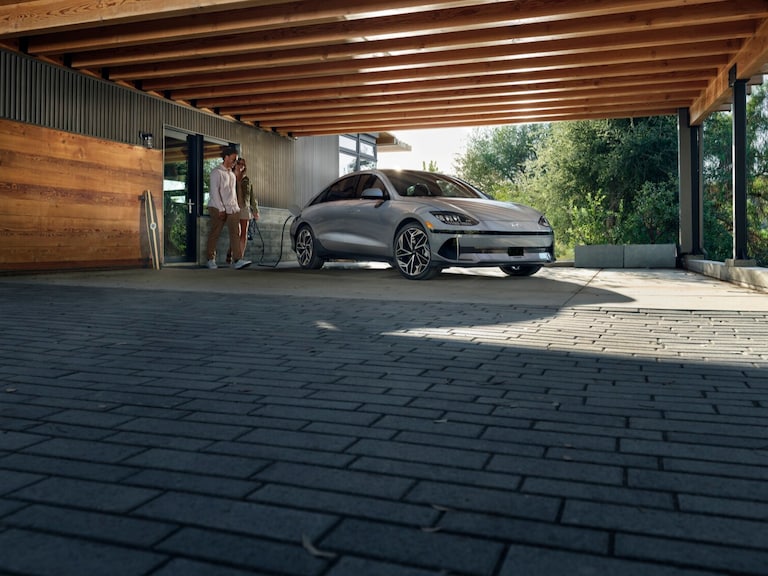
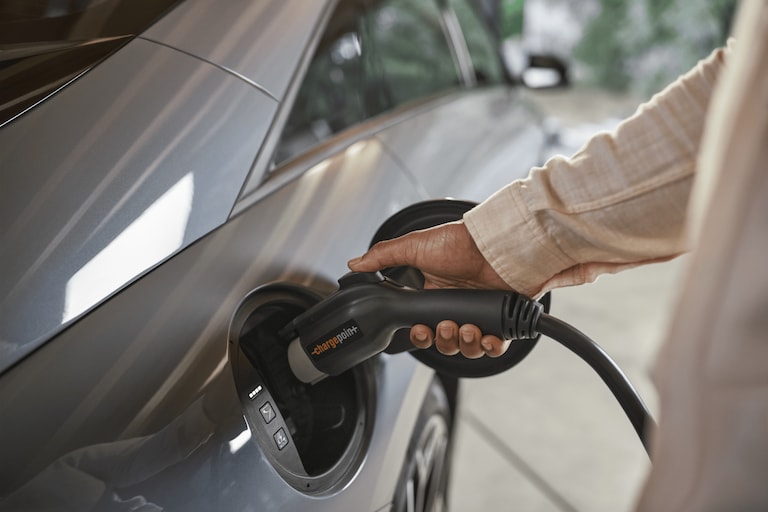
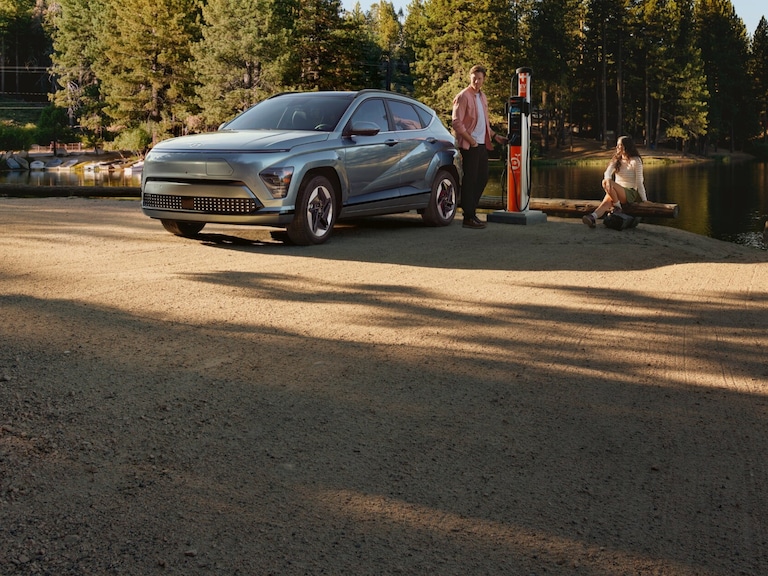
Cargar nunca ha sido tan fácil.
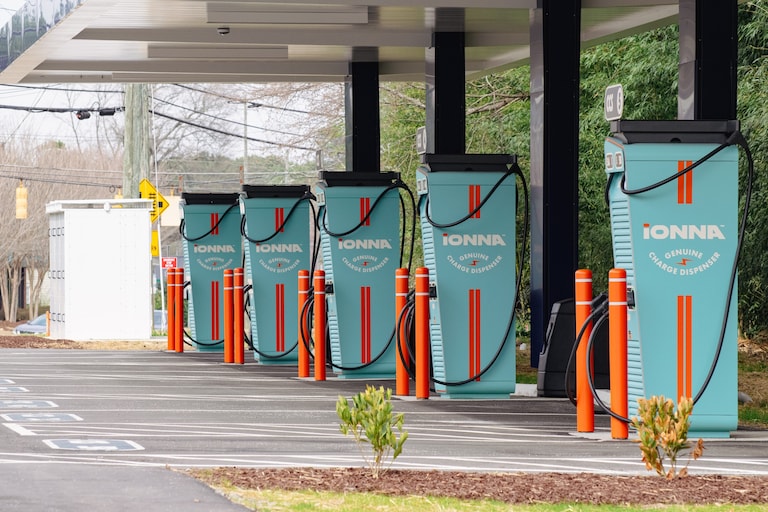
Con carga rápida DC disponible en todo el país a través de las redes ChargePoint e IONNA, puede sentirse seguro de que siempre hay energía más adelante.
Comodidad de carga
Carga sobre la marcha que lo pone a usted a cargo.
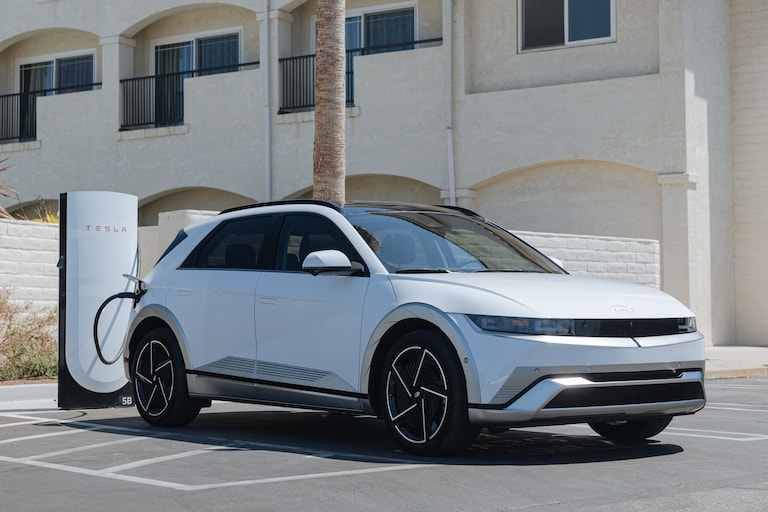
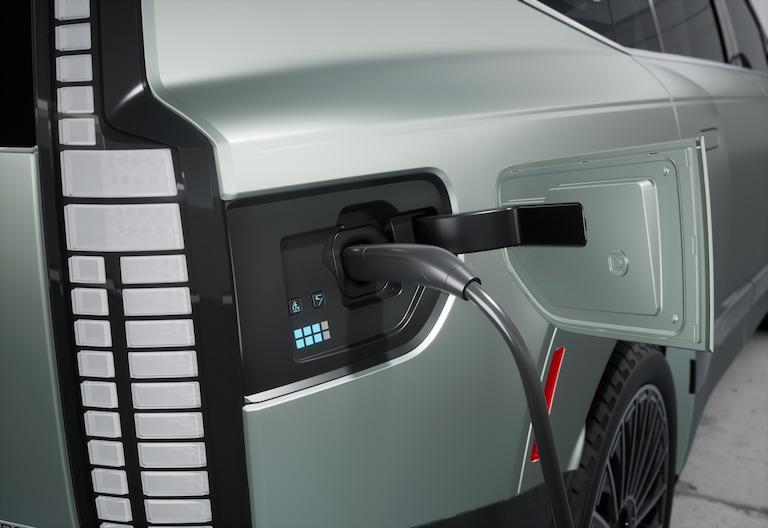
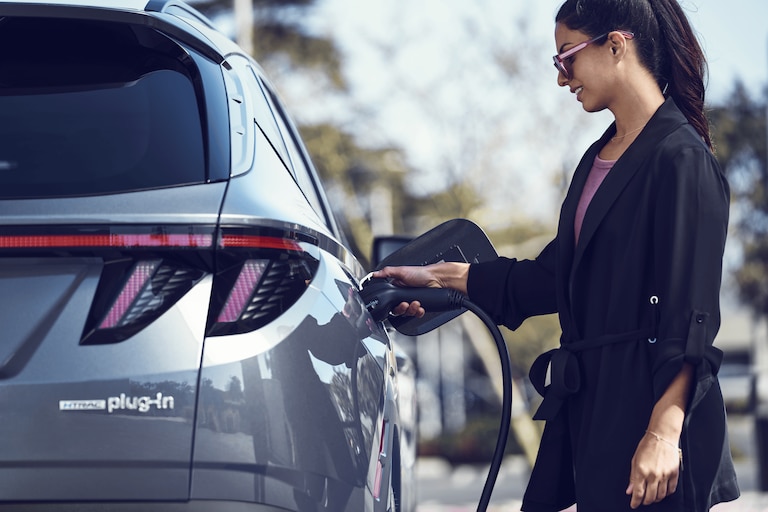
Cargar su Hyundai en la carretera se ha vuelto mucho más fácil. Obtiene acceso a una red más grande, que incluye Supercargadores Tesla, una aplicación Bluelink todo en uno que lo gestiona todo, y un sencillo sistema Plug & Charge que hace que el pago sea muy fácil.
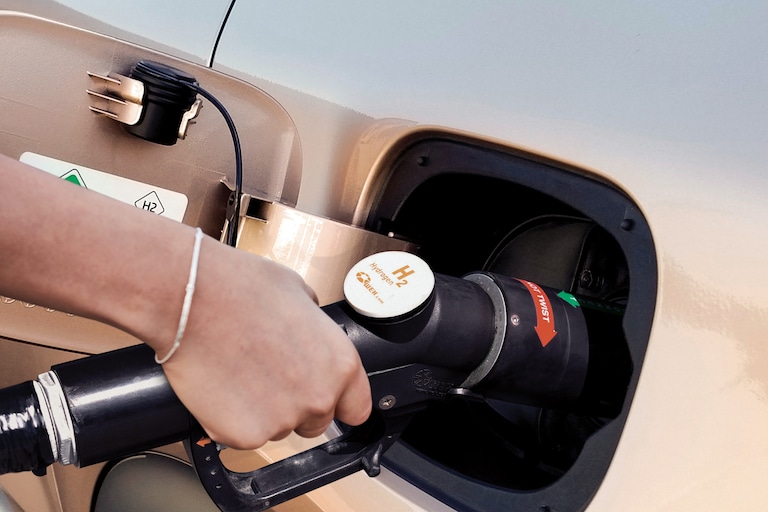
Carga de celda de combustible
Salud de la batería
Cuidado más inteligente de la batería. Mayor vida útil de la batería.
Proteja su batería del calor
Durante climas muy calurosos, los lugares con sombra o mantenerse enchufado cuando está estacionado ayudan a que el sistema de gestión térmica de su vehículo funcione de manera más eficiente.
Rango de carga ideal
Una carga del 100% está ahí cuando la necesita, pero el rango óptimo para una mejor vida útil de la batería está entre el 25% y el 75%.
Cargadores estándar
Si bien los cargadores rápidos DC son excelentes para viajes por carretera y para ahorrar tiempo, para la carga diaria, los cargadores estándar son mucho mejores para la salud a largo plazo de su batería.
Cargadores temporizados
¿Se va de vacaciones? Un cargador temporizado ayuda a mantener su batería en un nivel de carga ideal entre el 25-75% mientras está ausente.